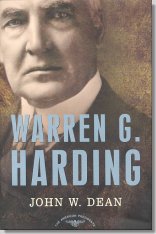
During his presidency, Warren G. Harding was
beloved. His presidential campaign slogan, "Not heroics but healing, not
nostrums but normalcy," gave voice to a public exhausted by World War I. Harding
inherited a White House in disarray after President Woodrow Wilson's
debilitating stroke. He promised the American people that, under his watch, life
and governance would once again be manageable.
His first priority was to bolster the economy,
which had spiraled into recession after the end of the war. Despite his
pro-business record as a U.S. senator and successful newspaper publisher in his
hometown of Marion, Ohio, Harding became a self-styled populist. While he signed
legislation limiting the number of immigrants in a tight labor market, he made
exceptions for hard-luck cases. He placed the executive branch on a sound
business footing with a new Bureau of the Budget, which succeeded in cutting
expenditures by $1 billion, and rejected the politically popular war bonuses for
soldiers that would have depleted the federal Treasury, paving the way for the
economic boom of the 1920s. Harding initiated a series of historic disarmament
treaties that reduced American, British, and Japanese naval fleets and limited
the use of poison gas. He even gained a reputation for personally answering his
own correspondence; magazine profiles lauded his efficient and smart approach to
the presidency. By the spring of 1923, the U.S. economy was recovering, and
Harding decided to take a tour of the West. When he died unexpectedly during the
trip, nine million Americans lined railroad tracks to witness the funeral train
as it passed, with crowds often singing the president's favorite hymn.
Yet Harding's legacy was soon tarnished by
scandals not of his making. It was the Teapot Dome affair -- in which the
interior secretary had opened national oil reserves to private companies in
exchange for alleged bribes -- that made his name synonymous with scandal.
Sensational headlines, congressional hearings, and criminal proceedings
continued for a decade. Harding's ruin was sealed when a dubious tell-all memoir
claimed that the president had had an extramarital affair and had fathered an
illegitimate daughter.
In this wise and compelling biography, John W.
Dean -- no stranger to presidential controversy himself -- gives us a portrait
of a man who succeeded in reestablishing order in the nation, struggled to keep
order in his own administration, and literally gave his life to the presidency.